Non-silicone ya Pan-kontrol na Bula
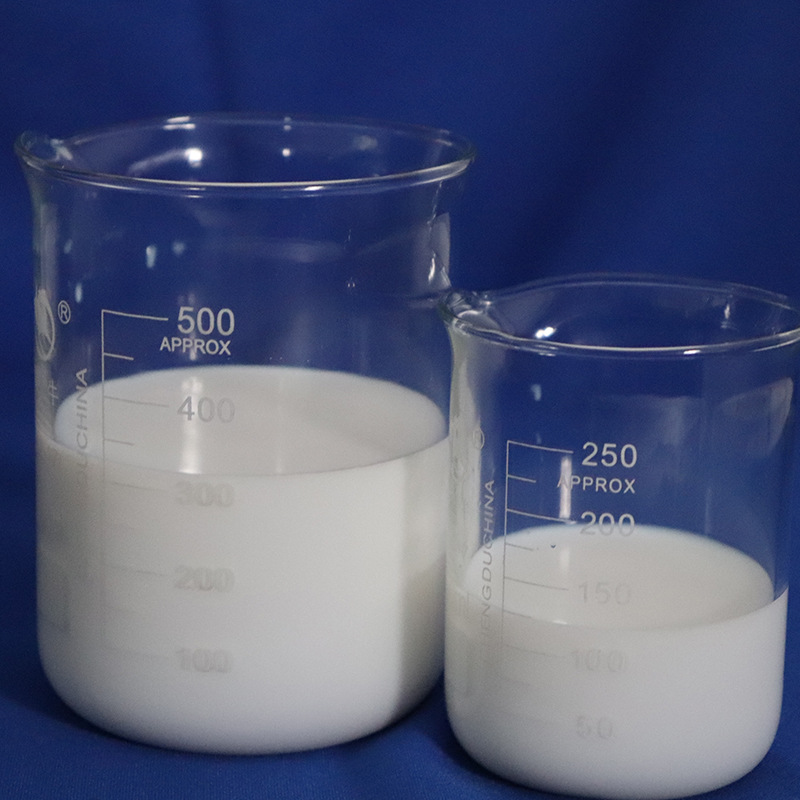
Non Silicone Anti Foaming Agent are chemical compounds designed to provide effective foam control in paints, coatings and inks. Usually water soluble and widely applicable applications. Formulations have been designed for maximum effectiveness with easy incorporation.
Contrary to their silicone counterparts, non-silicon defoamers do not leave residues behind and may help decrease production downtime and maintenance costs while being safer for filtration membranes.
Easy to use
Defoaming products work by decreasing surface tension between foam and liquid, keeping them apart to stop them combining and expanding, thus lowering foam levels. There are two types of defoamers: silicone-based and non-silicone based; the former typically offers superior durability and resistance against water intrusion.
Non-silicone defoamers tend to be less costly and can be used across various applications. Furthermore, these non-toxic defoamers are biodegradable – often making them ideal for food processing applications.
Foam suppressors are easy to use and are safe and effective solutions that can prevent foam build-up in drains, auto-scrubbers, hot vats, spray cabinets, steam machines, pools, fountains and agricultural spray tanks. A foam suppressor provides an affordable and safe solution that can even be used by breweries to stop their fermentation tanks producing foam; saving time while increasing productivity.
Effective
Non silicone defoamer are highly effective defoamers for both solvent-borne and water-based systems, offering effective foam suppression and bubble bursting effects as well as good dispersibility and durability. Their effectiveness does not decrease after long-term storage, making them safer to handle than silicone-based defoamers.
Non silicone antifoams offer many advantages over their silicone counterparts, including lower costs per kilogram and less surface defects in dried films and coatings, easier storage costs, no refrigeration requirements and a reduced likelihood of surface defect occurrences. Products made of silicone-based compounds tend to be less stable and better suited for non-aqueous systems, making them ideal for oil refining as well as paints, inks, and coatings. They are especially helpful in oil refinery as well as paints, inks and coatings production. Silicone-based defoamers tend to interact negatively with other ingredients in formulations and may lead to skin irritation, while polyether-modified polysiloxane defoamers do not. Recently, they have become a hot research topic; being synthesized via emulsion polymerization using 2-ethylhexylacrylate (2-EHA) and vinyl acetate (VAC) monomers as monomers, and benzoyl peroxide as an initiator.
Low cost
Defoamers are widely utilized across industries to prevent maintenance, safety and product quality issues caused by foam. They help ensure maximum efficiency and consistency while coming in a range of options to fit individual applications. Furthermore, these defoamers work equally effectively in both solvent-based systems as well as water-based environments.
Silicone oils formulated to contain hydrophobic silica dispersed into solution are used as the base material. Their low surface tension enables them to spread quickly at the gas-liquid interface, weaken bubble walls quickly, and dissolve foam bubbles more effectively than traditional approaches.
Polyether silicone defoamers offer high efficiency, good stability, low dosages and less degradation under harsh environments than silicone antifoamants, making them the go-to choice for oil-based applications. Yu Wu et al. have created an efficient 2-EHA/VAC copolymer defoaming agent capable of suppressing foam effectively for lubricating oil by dropping mixed monomers into toluene: this defoaming agent features rapid foam-bursting speeds, long effective suppression times and durability against shear forces.
Environment friendly
Non Silicone Anti Foaming Agent are manufactured using raw materials that do not contain PFASs, which have been linked with numerous health problems. Furthermore, these anti foaming agents exhibit excellent thermal stability and durability (shear stability). Non Silicone Anti Foaming Agents are often employed in lubricating oil applications in order to decrease surface tension between oil and air as well as rupture foam lamellas more effectively.
we offer an assortment of silicone free defoamer that provide solutions for issues caused by foam, such as maintenance, safety and product quality issues that it creates – saving both time and money in maintenance, safety, product quality management.
Polyacrylates, polyethers, and fatty alcohols are among the many silicone free defoamers on the market; generally an acrylate-based defoamer offers the greatest defoaming effectiveness across a range of applications while remaining safe to use and long lasting in their shelf life. Furthermore, these defoamers may even be diluted with water without loss in performance as a defoamer.
 Pangasinan
  English (United States)
  Arabic
  Bulgarian
  Czech
Czech  Danish
  German (Austria)
  German
  Greek
Greek  Spanish (Peru)
  Spanish (Colombia)
  Spanish (Spain)
  Spanish (Argentina)
  Spanish (Mexico)
  Spanish (Chile)
  Estonian
  Finnish
  French (France)
  French (Belgium)
  Hungarian
  Indonesian
  Italian
  Japanese
  Korean
  Lithuanian
  Latvian
  Norwegian
  Dutch
Dutch  Dutch (Belgium)
  Polish
  Portuguese (Portugal)
  Portuguese (Brazil)
  Romanian
  Russian
  Slovak
  Slovenian
  Swedish
  Turkish
  Ukrainian
  English (South Africa)
  German (Switzerland)
  Spanish (Costa Rica)
  Spanish (Venezuela)
  Spanish (Ecuador)
  Spanish (Dominican Republic)
  Spanish (Uruguay)
  Spanish (Puerto Rico)
  Spanish (Guatemala)
  French (Canada)
  Hebrew
  Hindi
Hindi  Icelandic
  Irish
Irish  Kazakh
  Kurdish
  Kurdish
  Kyrgyz
  Latin
Latin  Malay
Malay  Persian
  Portuguese (Angola)
  Portuguese (Portugal, AO90)
  Serbian
  South Azerbaijani
  Tamil
Tamil  Tamil (Sri Lanka)
  Thai
Thai  Urdu
Urdu  Uzbek
Uzbek  Vietnamese
  Welsh
Welsh  Chinese
  Albanian
  Aymara