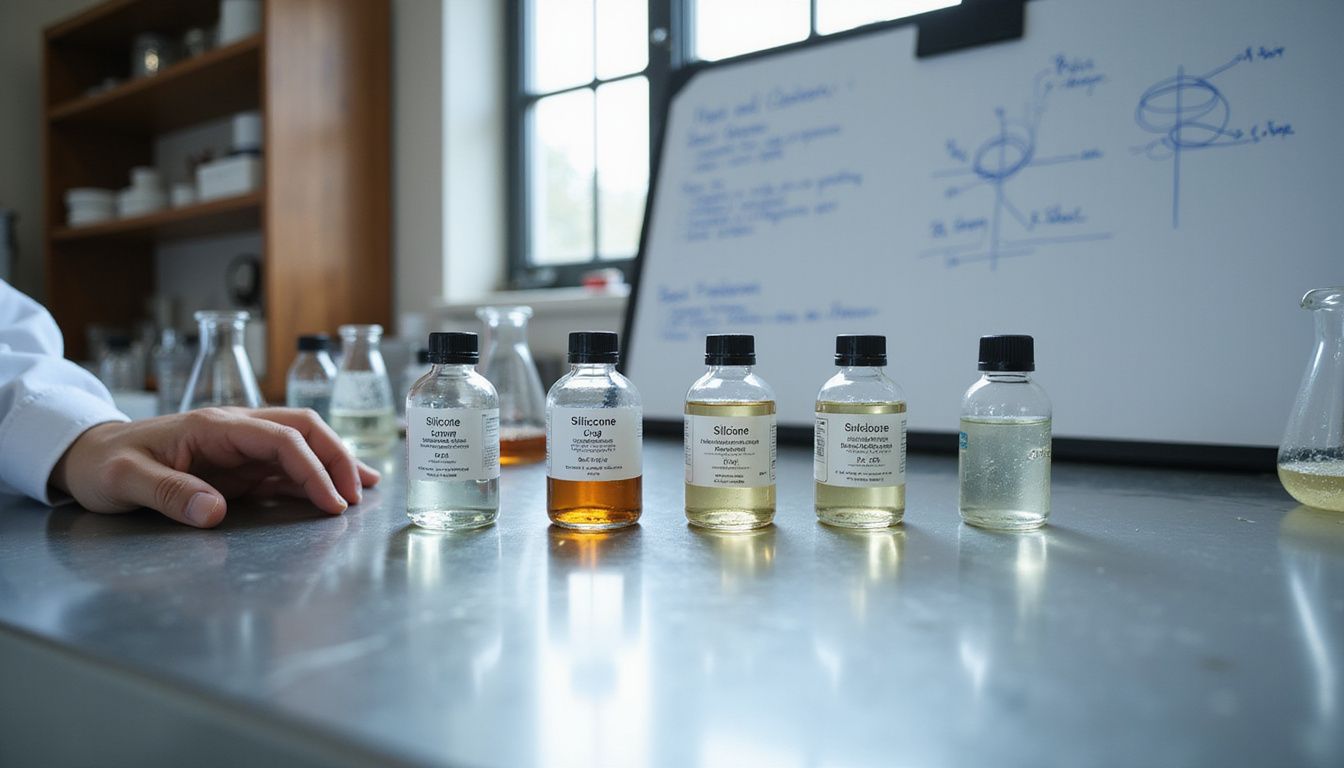
Foam can be a real headache in many industries. Silicone defoamer are smart ways to keep foam down including in water based systems. This guide breaks down the types, uses, and best practices of these machines.
Read on to make foam problems disappear!
Xalên Sereke
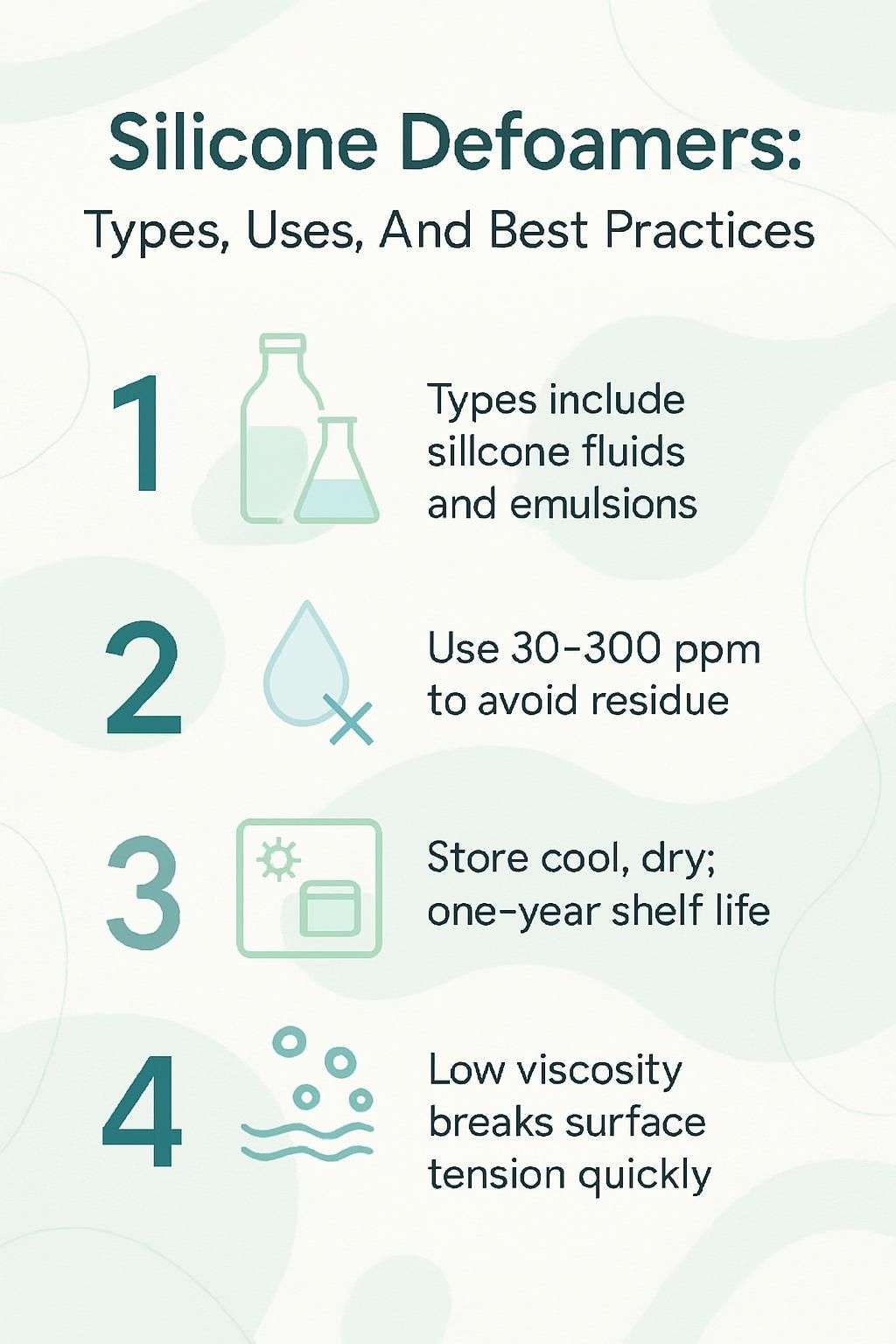
- Silicone defoamer are used in industries such as wastewater treatment, food production, and cleaning systems.
- There are silicone fluids, emulsions like FOAMKILL S-20, and self-emulsifying products for easy mixing.
- When using appropriate doses (30-300 ppm), make sure to check for compatibility first.
- Keep in a cool, dry place with a shelf life of a year; use clean tools to handle.
- Low viscosity choices work well in aqueous systems by breaking surface tension quickly and efficiently.
Types of Silicone Defoamers
Silicone defoamers come in various forms to suit different tasks. Each type works differently, depending on the foam and liquid involved.
Silicone fluids
Silicone fluids work as excellent antifoaming agents. As they have a low viscosity and spread quickly, it is economical for many applications. These fluids lower foaming by breaking the surface tension in aqueous systems such as public pools or wastewater plants.
They don’t take part in chemical reactions and are safe to use in industries. Their inert characteristic means that only a little is needed to be effective and prevent contamination.
For the food production or products like shampoo where purity is paramount, this feature is key.
Silicone emulsions
These emulsions are blends of silicone fluids and water. They act as powerful antifoam agents in aqueous systems. With a pH of around 7.6 ± 0.5, they are stable in wastewater treatment, even cutting oils, among others.
Products like FOAMKILL S-20 and R-22 use these formulations to effectively reduce foam. Their low viscosity of 800–1,400 cps (up to 4,500 cps) allows them to be easily mixed into wetting agents or industrial mixtures.
These emulsions do not separate readily and may be used, for example, as release agents or for ind. processes having a requirement of fast defoaming.
Self-emulsifying formulas
Self-emulsifying formulas mix easily with aqueous systems. They require no extra preparation, saving time and effort. The application of such formulas occurs in wastewater treatment in the case of rapid dispersion.
Crucible Chemical’s Foamkill products are silicone defoamers of this type.
Without interfering with the other elements of the system, the formula minimizes foaming. It works well even with low viscosity liquids. Options that self-emulsify help in dealing with foams in industrial processes.
Common Uses of Silicone Defoamers
Silicone defoamers are like the quiet heroes in many industries. They tackle pesky foam issues, making processes smoother and more efficient.
Industrial processes
Foam can harm industrial systems. Waterborne inks, adhesives, and paints are productivity solvers. A silicone defoamer can effectively eliminate foam and maintain flow. It works well in aqueous systems with low viscosity needs.
When cleaning, factories that use wet or dry vacuums often get foams. Choosing the right silicone defoamer reduces downtime and boost performance. Foaming agents are used in various waste water plants that de-foam and speed up the operations. Further, they also save costs incurred for repair or recurring delays.
Water treatment
Silicone defoamers play a key role in wastewater treatment. They help defoam aqueous systems for smoother operations. Products like Foamkill R-22 are common choices.
These formulas are effective at 30–300 ppm to avoid overzealous application.
Silicone emulsions with low viscosity are also effective in combating foam in water. They break down bubbles quickly to improve clarity and system. Many plants use a silicone-based solution to manage the aeration tank or clarify effluent before discharge.
It saves energy and reduces operational costs.
Food and beverage production
Foam buildup can slow down food and drink production lines. Silicone defoamers can address this problem in non-food areas, cleaning systems or wastewater treatment. Defomers of this group reduce the surface tension of aqueous systems quickly and effectively.
Pipes and tanks utilized in the stages of liquid processing best suit the low viscosity options. Most are not suitable for direct food contact but are excellent for equipment cleaning and keeping things clear.
Make good use of them so you won’t incur extra charges due to equipment downtime or maintenance work from foam clogs.
Best Practices for Using Silicone Defoamers
Using silicone defoamers the right way can save money, time, and headaches—learn how with a few easy tips.
Proper dosage and application
Use silicone defoamer at 30-300 ppm for best results. It does an excellent job of addressing aqueous systems, generally in waste water, and food. Add the product slowly to avoid overuse.
Too much can cause residue or affect performance.
Formulas with low viscosity spreads faster and are easier to mix. Before deploying to your own system, test a small amount to see if it works. Adjust as needed based on foam levels during use.
Storage and handling guidelines
Store silicone defoamer in a cool and dry place. Use them within a year because they have one-year shelf life. The freeze-thaw cycles are handled very well and stable after autoclaving.
Keep containers tightly sealed to prevent contamination. In aqueous systems, including waste water treatment, unwanted reactions can take place depending what you use to transfer or handle. So use clean equipment or tools.
Encam
Silicone defoamer are reliable and versatile. This can be used in a variety of industries including food and wastewater. Using the right kind properly makes all the difference in the world.
Keep storage and handling simple for better results. With these tips, tackling foam becomes easy!
Pirsên Pir Tên Pirsîn
1. What are silicone defoamers, and how do they work?
Silicone defoamers are additives used to reduce or eliminate foam in liquids. They break down bubbles quickly, making them ideal for aqueous systems like wastewater treatment.
2. Where can silicone defoamers be used?
They are widely used in industrial processes such as wastewater treatment and other applications involving wet/dry vacuums or cleaning systems with low viscosity fluids.
3. How do I choose the right type of silicone defoamer?
Consider your specific needs, such as the liquid’s properties (like viscosity) and whether you’re working with an aqueous system. Pricing also matters, so compare options before checkout.
4. Are there any tips for using silicone defoamers effectively?
Start with a small amount to avoid overuse, especially in sensitive systems like wastewater treatment. Always follow best practices for application methods to get optimal results.
5. Can I buy silicone defoamers online through platforms like Amazon Prime?
Yes, you can find various types of silicone defoamers online on platforms offering convenient features like subscribe-and-save programs or credit card payment options at competitive prices!
 Kurdish
  English (United States)
  Arabic
  Bulgarian
  Czech
Czech  Danish
  German (Austria)
  German
  Greek
Greek  Spanish (Peru)
  Spanish (Colombia)
  Spanish (Spain)
  Spanish (Argentina)
  Spanish (Mexico)
  Spanish (Chile)
  Estonian
  Finnish
  French (France)
  French (Belgium)
  Hungarian
  Indonesian
  Italian
  Japanese
  Korean
  Lithuanian
  Latvian
  Norwegian
  Dutch
Dutch  Dutch (Belgium)
  Polish
  Portuguese (Portugal)
  Portuguese (Brazil)
  Romanian
  Russian
  Slovak
  Slovenian
  Swedish
  Turkish
  Ukrainian
  English (South Africa)
  German (Switzerland)
  Spanish (Costa Rica)
  Spanish (Venezuela)
  Spanish (Ecuador)
  Spanish (Dominican Republic)
  Spanish (Uruguay)
  Spanish (Puerto Rico)
  Spanish (Guatemala)
  French (Canada)
  Hebrew
  Hindi
Hindi  Icelandic
  Irish
Irish  Kazakh
  Kurdish
  Kyrgyz
  Latin
Latin  Malay
Malay  Pangasinan
  Persian
  Portuguese (Angola)
  Portuguese (Portugal, AO90)
  Serbian
  South Azerbaijani
  Tamil
Tamil  Tamil (Sri Lanka)
  Thai
Thai  Urdu
Urdu  Uzbek
Uzbek  Vietnamese
  Welsh
Welsh  Chinese
  Albanian
  Aymara